Lead Like They're Already Winning


This week, I came across a leadership framework that I couldn't resist sharing called Transformational Leadership by James V. Downton and James MacGregor Burns. Instead of honing in on the mistakes, missed deadlines, or gaps in skills, what if we led like our team is already winning?
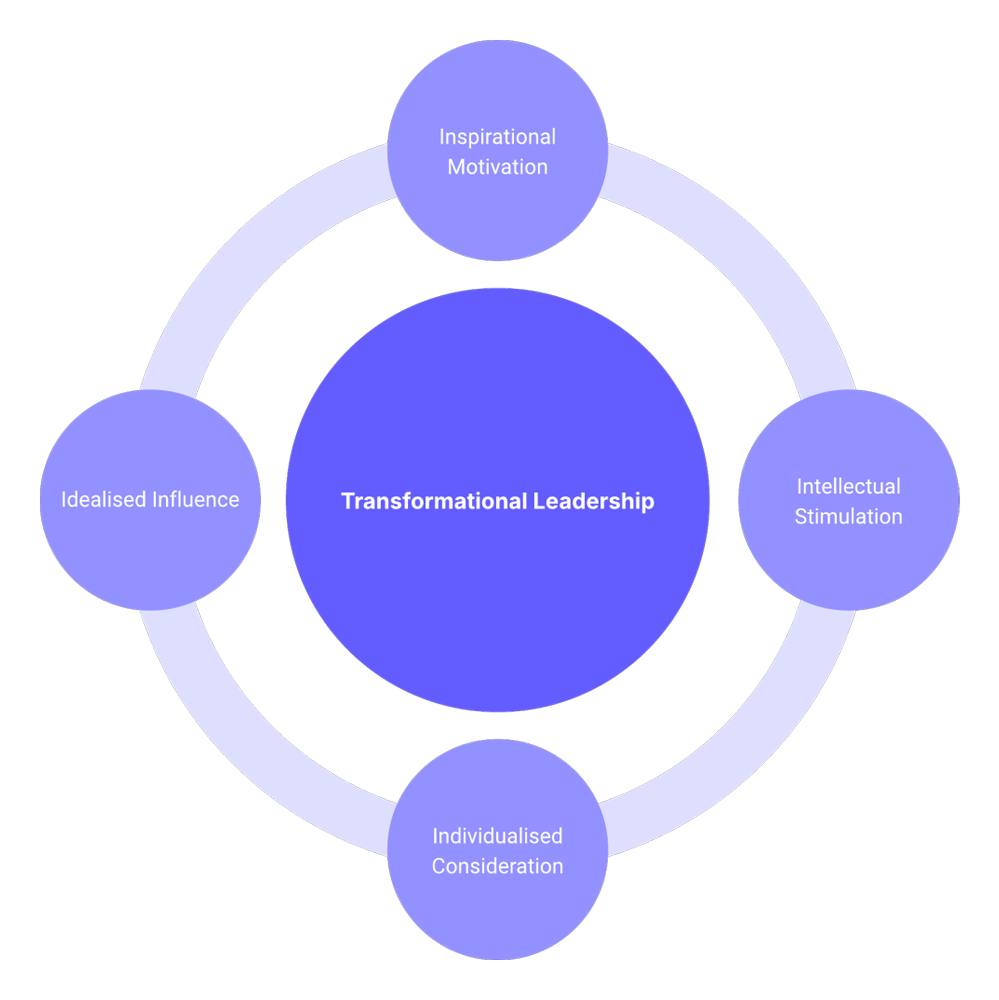
The Transformational Leadership theory explores four key pillars: idealised influence, inspirational motivation, intellectual stimulation, and individualised consideration.
Mindset changes everything, and I truly believe that positive reinforcement allows people to grow much quicker than the other alternative. I recently listened to a Diary of a CEO podcast hosted by Steven Bartlett featuring Professor Alison Wood Brooks.
In a study conducted in 2014, Prof. Brooks explored how reframing pre-performance anxiety into excitement often leads to better performance. The study found that associating anxiety with excitement, rather than seeing it negatively, dramatically increased individuals’ confidence and their perception of their own abilities.
Applying this to the workforce, its easy to see how facilitating a positive environment leads to better performance overall. In the context of the Transformation Leadership framework, we focus on strengths, and celebrating growth rather than shortcomings.
Leading with idealised influence allows us to model the high ethical behaviours we want to see from others. Inspirational motivation ensures we create a vision that inspires and is appealing, where team members feel capable and valued. Intellectual stimulation encourages team members to challenge assumptions, take risks, and share ideas, while individualised consideration ensures everyone gets the support needed to thrive, as a mentor, or a coach highlighting the individual contributions each team member makes.
Leadership isn’t about pointing out what’s wrong but rather shifting focus on the conditions needed for people to feel capable and excited to contribute. When we lead like our team team is already winning, we cultivate a culture where everyone can grow and see themselves as a leader too.